A Sweet Braided Tradition Passed Down Through Generations
Some recipes are more than just food, they carry memories, traditions, and stories from one generation to the next. Hefekranz is one of those recipes for me.
This soft, lightly sweet, braided bread has been part of my family for years. My mother learned to make this traditional Easter bread from her grandmother, who was born is Germany. Over time, it became more than a holiday recipe, it became a way to stay connected to our roots.
I’ve carried on that tradition in my own kitchen, making this bread not only for Easter, but also during Christmas. While I shape it into a wreath for Easter, I often bake it as a loaf during the holidays. No matter the shape, the flavor and meaning stay the same.
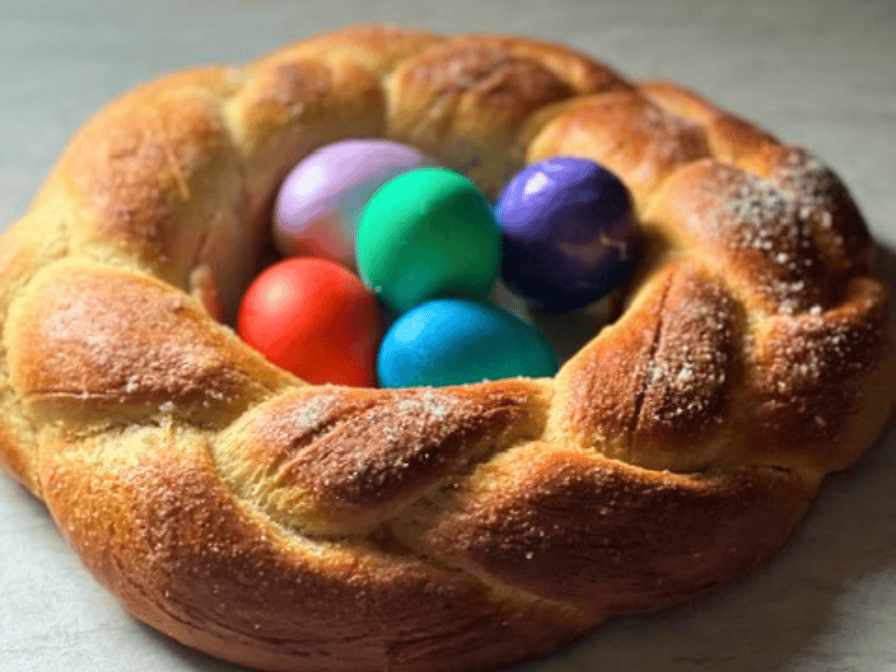
For Easter, I love adding colored eggs right into the center of the wreath and sometimes I will add a small bowl with my family’s favorite purple pickled eggs in the center. It creates a beautiful centerpiece and makes the bread feel even more special and symbolic.
What is Hefekranz?
Hefekranz is a traditional German yeast bread. The word itself comes from two parts:
- “Hefe” meaning yeast
- “Kranz” meaning wreath
It’s typically a soft, enriched dough made with butter, eggs, and milk, then braided and shaped into a ring. The braid is often said to represent unity or, in some traditions, the Holy Trinity, making it especially meaningful during Easter celebrations.
A Brief History of Hefekranz
Hefekranz has roots in German baking traditions where enriched breads were often reserved for holidays and special occasions. Because ingredients like butter, sugar, and eggs were once considered luxuries, breads like this were a sign of celebration.
Braided breads are common across many European cultures, but in Germany, the wreath shape became especially tied to Easter. The circular form symbolizes eternity and renewal, themes that align closely with the season.
Over time, families adapted the recipe in their own ways, adding citrus zest, raisins, or decorative elements like dyed eggs. What stays consistent is the soft texture, lightly sweet flavor, and the sense of tradition behind it.
Why You’ll Love This Recipe
- Soft and lightly sweet with a rich, buttery flavor
- Beautiful presentation—perfect for Easter tables
- Versatile—can be shaped into a wreath or loaf
- Tradition-rich—a meaningful recipe to share with family
Tips for the Best Hefekranz
This bread isn’t difficult, but a few key tips will make a big difference:
1. Don’t overheat the milk
Warm—not hot—is key. Too much heat can kill the yeast.
2. Let the yeast bloom fully
If it’s not foamy after 10–15 minutes, start over. This step ensures a good rise.
3. Knead until smooth and springy
This develops the gluten and gives you that soft, fluffy texture.
4. Be careful not to overbake
This is important. Overbaking can dry out the bread. Start checking around 25 minutes. The bread should be golden but still soft.
5. If it does dry out—don’t toss it
Slightly drier slices actually make excellent bread for dipping in coffee or tea.
Shaping the Hefekranz: Step-by-Step
Once your dough has risen and you’ve punched it down, this is where the magic really starts to happen. Turning a simple dough into a beautiful braided wreath is easier than it looks, and these steps will guide you through it.
Step 1: Divide the Dough
After the first rise, transfer your dough to a lightly floured surface and gently punch it down to release the air.
Divide the dough into three equal pieces. Try to keep them as even as possible so your braid bakes uniformly.

Step 2: Roll into Ropes
Take each piece of dough and roll it into a long rope, about equal in length. Work gently and evenly, starting from the center and rolling outward.
If the dough springs back, let it rest for a few minutes and then continue rolling.

Step 3: Braid the Dough
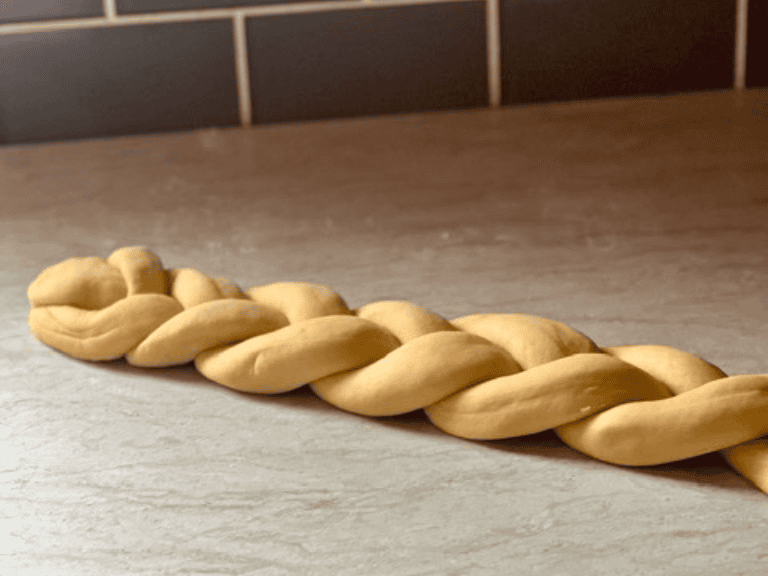
Line the three ropes up side by side and pinch them together at one end. Begin braiding just like you would braid hair—crossing one strand over the center, alternating sides.
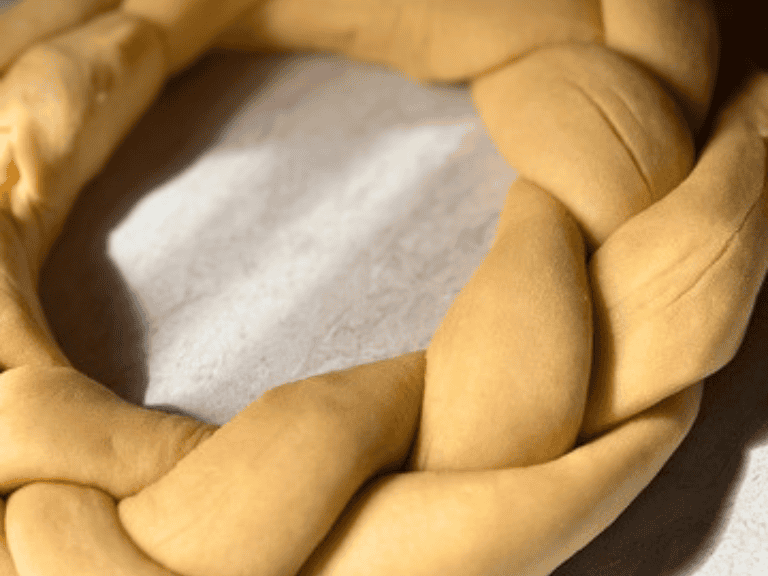
Once you reach the end, pinch the ends together and gently shape the braid into a wreath.
Place a ramekin or small oven-safe bowl in the center to help hold the shape as it rises and bakes


Variations to Try
Once you’re comfortable with the base recipe, there are plenty of ways to customize it:
- Add raisins or dried fruit for a more traditional European variation
- Use orange zest instead of lemon for a different citrus flavor
- Top with sliced almonds for added texture
- Dust with powdered sugar after baking for a simple finish
- Make it into a loaf instead of a wreath (perfect for Christmas)
Frequently Asked Questions
Can I make this dough ahead of time?
Yes. After the first rise, you can refrigerate the dough overnight. Let it come to room temperature before shaping.
Can I freeze Hefekranz?
Yes. Wrap tightly and freeze for up to 2 months. Thaw at room temperature.
Why didn’t my dough rise?
Most likely the yeast was inactive or the milk was too hot. Always check for that foamy bloom.
How do I get my Easter eggs more vibrant like the picture?
Dyeing Easter eggs with gel food coloring provides a more vibrant color.
Final Thoughts
Hefekranz is more than just a bread, it’s a tradition that connects generations. From my great-grandmother to my mother, and now in my own kitchen, this recipe carries both history and heart.
Whether you’re making it for Easter, Christmas, or simply to try something new, it’s a recipe that brings warmth to the table and creates lasting memories.
And once you make it, don’t be surprised if it becomes part of your own traditions too.
If you want to add a colorful and flavorful twist to your Hefekranz, try placing my purple pickled eggs in a small bowl in the center of the wreath instead of traditional dyed eggs. This makes a beautiful centerpiece and add a tangy bite that pairs surprisingly well with the lightly sweet bread.

Hefekranz (German Easter Trinity Bread)
Ingredients
- 4 cups 500g all-purpose flour
- 6 tablespoons 80g butter, softened
- 2 1/4 teaspoons 25g active dry yeast
- 1/3 cup + 1 tablespoon 80g sugar, divided
- 1/4 teaspoon salt
- 1/2 to 2/3 cup 125–150 ml milk, warmed
- 2 eggs
- Zest of 1 lemon
- 1/2 teaspoon vanilla extract
- 1 egg yolk
- 1 tablespoon water
- 1 tablespoon butter for greasing
- Sugar for sprinkling
- Colored eggs optional, for decoration after baking
Method
- Warm the milk until just warm to the touch.
- In a small bowl, combine warm milk, 1 tablespoon sugar, 50g (about 1/3 cup) flour, and yeast. Let sit 10–15 minutes until foamy.
- In a separate bowl, mix remaining flour and butter until combined.
- In another bowl, whisk together remaining sugar, eggs, milk, salt, vanilla, and lemon zest.
- Make a well in the flour mixture and add the yeast mixture and wet ingredients. Mix until a dough forms.
- Transfer to a floured surface and knead until smooth and springy.
- Grease a bowl with butter, add dough, cover, and let rise for about 60 minutes.
- Punch down dough and divide into 3 equal pieces. Roll into ropes and braid. Shape into a wreath.
- Place a ramekin in the center to hold the shape.
- Cover and let rise for 45 minutes.
- Preheat oven to 350°F.
- Mix egg yolk and water and brush over dough. Sprinkle with sugar.
- Bake for about 25 minutes, or until golden brown. Do not overbake.
- Cool slightly before removing ramekin and serving.